Boston & Beyond


Subscribe
Sign up for email updates on new blog posts.
Server Snapshots

Support Server Not Servant
To encourage more blog posts, and expedite the publication of the Server Not Servant book, please consider a (non-deductible) contribution. Thank you.
The Book
Search
Archives
98 Fired Hyatt Housekeepers
By: Patrick Maguire
Book Chapter: Human-to-Human Service
Posted: 1/2/2010
So much for letting sleeping dogs lie. In case you missed it, on Christmas morning Phil Stamm, GM of the Hyatt Regency in Boston, raised the ire of many readers when his op-ed piece appeared in the Boston Globe. I encourage you to read the entire piece and all of the comments that follow it. The majority of the comments are in support of re-hiring the 98 fired housekeepers and denounce Mr. Stamm’s submission to the paper. Some of the housekeepers fired last summer had been with the Hyatt for more than 20 years. Because of the public piece submitted to the Globe, the public debate about replacing the fired housekeepers with out-sourced, contract workers has been reignited.
Here is an excerpt from the Christmas day Boston Globe piece written by Phil Stamm:
“…The number of visitors to Boston plummeted, as did revenue at our hotels. We had to make tough decisions to keep our business afloat and preserve as many jobs as possible. Early steps included management reductions and every cost-cutting tactic we could muster. In August, we made a difficult decision we had hoped to avoid, laying off 98 housekeepers and hiring an outside company to manage this work.”
In response to Mr. Stamm’s piece, I delivered a letter to the concierge at the Hyatt Regency in Boston on 12/26, and was assured that Mr. Stamm would receive it. I invited a response to the questions in my letter before I published this blog post. I also copied and invited responses from the following people:
Hyatt: Thomas Pritzker-Chairman, Penny Pritzker, Mark Hoplamazian-CEO, H. Charles Floyd-COO North America, Susan Smith-General Counsel, John Willis-Global Marketing, Robert W.K.Webb-Chief HR Officer, Farley Kern-VP Corporate Communications, Lori Alexander-Director Field PR, North America, Amy Patti-PR Manager and Katie Rackoff-PR Manager.
Rabbi Barbara Penzer-Temple Hillel B’nai Torah West Roxbury, MA
Cambridge, MA Mayor Denise Simmons
Boston Mayor Tom Menino
MA Govenor Deval Patrick
MA Senator John Kerry
Unite Here, Local 26: Katharine Cristiani, Jeffrey Nelson and Nat Lippert (These are the admins listed on the Facebook group, Bring Back the Hyatt 100!)
The only people I have heard back from so far are Phil Stamm, Cambridge Mayor Denise Simmons and Rabbi Barbara Penzer.
Rabbi Penzer submitted a letter to the Globe in response to Mr. Stamm’s op-ed piece, but asked that I not quote from it directly.
I invite anyone mentioned above who was not able to respond this week to participate in the discussion by adding your comments at the end of this post.
Please click on the following three items to read the full text:
– My letter with 7 questions for Phil Stamm.
– Cambridge Mayor Denise Simmons’ letter to Mark Hoplamazian, Hyatt CEO.
Here are my questions and Mr. Stamm’s responses:
(My follow-up comments are in parentheses.)
PM(Patrick Maguire): #1-Were you aware that your letter was going to be published in the Globe on Christmas day?
PS(Phil Stamm): My submission to the Boston Globe was made in response to some continuing misinformation about the unprecedented offer we have made to our former housekeepers in Boston. It was drafted and submitted some time ago and indeed we certainly did not intend for it to appear on Christmas.
(I invite a representative of the Boston Globe and Mr. Stamm to clarify the timing of the op-ed piece on Christmas day. Mr. Stamm-When did you submit the piece? To the Globe- Did you seek authorization from Mr. Stamm to run the piece on Christmas day? Did the Globe purposely hold onto Mr. Stamm’s submission and strategically run it on Christmas day hoping to elicit the public outcry that it has?)
PM: #2- You mention that you “…had to make tough decisions to keep our business afloat and preserve as many jobs as possible,” and that, “Early steps included management reductions and every cost-cutting tactic we could muster.” Please provide as much detail as possible regarding the tough decisions and cost-cutting tactics that you employed so I can better understand your rationale for firing the housekeepers.
The letter from Mr. Stamm does not directly answer this question, so let me clarify my intent.
To Phil Stamm- You brought the firing of the housekeepers out in the open again by re-engaging the public with your submission to the Boston Globe. It’s obvious that your op-ed piece was meant to rationalize your decision about the firings, and attempt to repair Hyatt’s battered public image. Your strategy has backfired. As of this publication, most of the 85 comments on the Globe website support re-hiring the fired housekeepers, and several mention boycotting Hyatt until that happens. You have further alienated yourself and the Hyatt by making ambiguous references about “tough decisions,” “management reductions,” and “every cost-cutting tactic we could muster.” It is very hard to empathize with you without any detail (Again, you brought this public, and your assertions warrant an explanation). You’re implying that the only way you could stay afloat was to outsource the housekeeping jobs. Your response is not convincing.
A. What tough decisions did you make to keep your business afloat and preserve as many jobs as possible?
B. Please detail the management reductions that you referenced.
C. What cost-cutting tactics did you employ before the housekeeper firings?
D. Did you and your managers have your compensation packages reduced as part of your “cost-cutting tactics?” If yes, please explain.
PM: #3- Can you please describe the negotiations or arbitration process (if there was one) that occurred between Hyatt and the 98 housekeepers before you fired them? Please include what your final offer was that they refused before your final decision to terminate them. Did you let the housekeepers know that if they didn’t accept a reduced compensation package that they would be terminated?
PS: No response.
(Does your lack of response mean that you made no attempt to negotiate with the housekeepers before firing them?)
PM: #4- A preliminary evaluation of your costs vs. benefits of firing the housekeepers just doesn’t makes sense, financially or otherwise. In the long run, are you really saving that much money? It appears from both short and long-term perspectives that you would benefit from admitting a mistake, apologizing profusely, and hiring back the housekeepers, immediately. Short-term you are paying the fees to HSS for the new workers, legal counsel, plus benefits to the fired staff, and suffering from boycotts and a PR nightmare. Longer-term you’re looking at a potential huge settlement, as well as continued boycotts and PR fire storms. Sticking to your guns looks like a no-win proposition. Please comment.
PS: No response
(I’d like to hear real stories and projected financials from vacation and business travelers, event planners, travel agents, corporate and private function planners, and everyone that has any information about Hyatt boycotts on rooms and functions as a result of the housekeeper firings. I’d like to attach some hard numbers to the boycott threats. Please weigh-in on what your personal stance is and what your organization’s position is regarding boycotting Hyatt properties and venues.)
PM: #5- “…Was it clearly communicated and widely known by all Hyatt housekeepers that they were being phased out, and that a ‘transition’ to go with 100% HSS employees was underway, or was the staff just supposed to read the writing on the wall?”
PS: No response
PM: #6- I’m no expert on employment law, but apparently there is a federal law, Worker Adjustment Retraining Act (WARN), that requires employers to give employees a 60-calendar day advance notice of layoffs when the number of employees affected is 100 or greater. Did you purposely pare the number of remaining Hyatt housekeepers down to 98, then fire all of them at once to avoid being subject to the provisions within the WARN Act?
PS: Some of the questions you pose do not properly or easily lend themselves to the format you have presented. Your inquiry regarding WARN for example, applies the wrong number for the coverage analyses and would require a substantive legal discussion of WARN. We did not take any steps to avoid WARN, nor did we mislead our employees.
(I think my questions are very clear. As I mentioned, I’m no expert on employment law. Experts, feel free to weigh in on the discussion.)
PM: #7- How many of the 98 housekeepers who were fired were required to train their replacements? Did your supervisors lie to your housekeepers and tell them that the employees they were training were only being trained to cover for them when they were on vacation?
PS: No response.
(It would be great to see comments from the fired housekeepers, or from family and friends of the housekeepers on this issue to get an accurate account of what went on. Obviously we can’t rely on sensationalized media accounts, so I encourage as many people as possible with first-hand information to comment.)
As I read Phil Stamm’s piece on Christmas morning, it didn’t sit well with me at all. After reading all of the Globe reader’s responses, and Mr. Stamm’s letter in response to my questions, the whole situation is even more unnerving. I’ve read everything I could on-line and asked for input from as many people as possible. I also witnessed, first-hand, the cheerleading politicians and union leaders at the rally in the summer at the Hyatt Regency. I saw all of the fired housekeepers who were at the summer rally and I just can’t get this issue out of my mind. Here are some of the issues that resonate with me and make this situation so troubling:
– The wealth of the Pritzker family(Hyatt is majority-owned by the Pritzker family):
The 400 Richest Americans 2009
09.30.09, 06:00 PM EDT
| Rank | Name | Net Worth ($mil) | Age | Location | Source |
| 220 | Anthony Pritzker | 1,600 | 48 | Los Angeles | hotels, investments |
| 236 | Daniel Pritzker | 1,500 | 50 | Marin County | hotels, investments |
| 236 | James Pritzker | 1,500 | 58 | Chicago | hotels, investments |
| 220 | Jay Robert Pritzker | 1,600 | 44 | Evanston | hotels, investments |
| 236 | Jean (Gigi) Pritzker | 1,500 | 47 | Chicago | hotels, investments |
| 236 | John Pritzker | 1,500 | 56 | San Francisco | hotels, investments |
| 236 | Karen Pritzker | 1,500 | 51 | New Haven | hotels, investments |
| 236 | Linda Pritzker | 1,500 | 55 | St. Ignatius | hotels, investments |
| 326 | Nicholas Pritzker | 1,200 | 65 | Chicago | hotels, investments |
| 204 | Penny Pritzker | 1,700 | 50 | Chicago | hotels, investments |
| 196 | Thomas Pritzker | 1,800 | 59 | Chicago | hotels, investments |
Total Family Net Worth = 16.9 Billion
– According to Bloomberg.com, in November of 2009, Hyatt Hotles Corp. raised about $950 million by selling 38 million shares of stock at $25 each. On Thursday, 12/24/09, Hyatt stock closed at $29.81/share, making the 38 million shares worth more than 1.3 billion dollars.
– The fact that several of the fired housekeepers were long-time employees. (I would appreciate it if someone could post some statistics clarifying this claim.) Long-term employees are the sign of a well-run business. Think about how you feel when you see familiar servers at your favorite restaurant or local shops. Implementing retention strategies, and valuing long-term employees is critical to successful organizations.
– Outsourced employees are not stakeholders. (It also has to be a difficult environment for them to work in. ) In addition to the horrible impact that this move has had on PR, I can only imagine what it has done to morale within the company. Randy Goldberg, VP recruiting, Hyatt Hotels & Resorts: “We work hard to create a family-like environment, in which our associates can thrive and feel proud of their accomplishments and company.” Randy, is there anything you’d like to add to this discussion?
– I’m not buying the smoke screen about helping ‘our former colleagues’ transition with healthcare and new jobs. Benefits were extended only after a lot of people made a lot of noise. I hate to see the underdog get screwed. These women and their families didn’t deserve to be blindsided like this.
Paul Michelman authors a very thoughtful piece in the Harvard Business Review Blog on 12/29/09. I encourage you to read his entire entry, as well as all of the comments that it generated. Paul’s post ends with, “Indeed, it looks like the fired housekeepers are placing a pretty big bet on current sentiments. Yesterday they voted to reject Hyatt’s offer of guaranteed employment at current pay through 2010 with a staffing agency. The housekeepers seem intent on using public and political pressure to get their jobs back or gain other advantages in negotiations with Hyatt. Public opinion in the age of citizen media, blogs, discussion boards, and “email this article” is a force that can be quickly marshaled — sometimes to the great pain of those who run afoul of it.
So what’s the “so what” for companies? Be careful. Tread lightly. Think twice. You are surrounded by the watchful eyes, loud voices, and powerful key-stroking fingers of people who are angry, who are paying attention, and who believe they have the power to change the world. Ignore this climate, or assume you can “control the message,” and, well, you may end up having a fortnight like Hyatt’s.”
A link to this blog will be sent to everyone mentioned in this post inviting their comments.
All official statements from Housekeepers, Hyatt, corporations, organizations, politicians, and anyone else are welcome.
I welcome your thoughtful, factual and civil comments to the discussion. Thank you.
1/4/10 update: Fired Hyatt Housekeeper Fires Back.
1/5/10 update: Please read this piece by Martin Evans.
Permalink | Posted in Human-to-Human Service | 8 Comments »
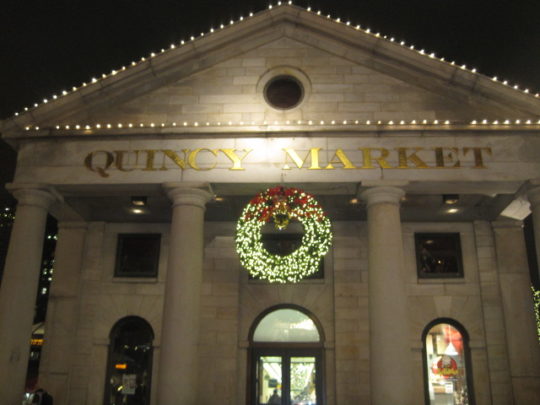
Merry Christmas & Happy Holidays from Boston
By: Patrick Maguire
Book Chapter: Human-to-Human Service
Posted: 12/25/2009



Permalink | Posted in Human-to-Human Service | No Comments »
“It’s Not My Job.”
By: Patrick Maguire
Book Chapter: Introduction
Posted: 12/22/2009
I hate when I hear the statement, “It’s not my job.” It implies laziness, selfishness and that someone isn’t willing to do whatever it takes to help their team succeed. Whether it be within a family, a work environment, or on any type of team, I despise it. The following story takes “It’s not my job” to a whole new level.
While enjoying breakfast this morning at Charlie’s Sandwich Shoppe, a Boston institution, I read in horror this story in The Boston Globe; Woman dies after EMT’s refuse aid. The allegations are that two New York EMTs refused to help a stricken, pregnant mom during their coffee break at Au Bon Pain in Brooklyn. They allegedly told the staff to call 911 and left without attending to the woman. The woman, who had a 3-year-old son, died at the hospital shortly thereafter. Her premature baby was delivered at the hospital but died two hours later.
According to the New York Post, employees of the Au Bon Pain approached two EMTs asking them to help a co-worker who had collapsed. The EMT’s were apparently concerned about getting in trouble for not following proper protocol while off-duty on a coffee break. They indicated that they couldn’t touch the woman unless a call to 911 was made first. According to one co-worker of the deceased, “They said they couldn’t do anything. They said they were trainees. They showed no sympathy at all.” The article also indicates that the EMTs work as dispatchers, one with six years on the FDNY and the other with four years FDNY experience.
Of course there are two sides to every story, but common sense tells me that the two EMTs dropped the ball. They should have immediately evaluated the woman, called for critical care, monitored her vital signs and condition and stayed with her until help arrived. Who knows if the woman and her baby would have survived if the EMTs responded with a sense of urgency, but it’s appalling that they were indifferent and two people died. I’ll wait for the investigation to conclude before passing final judgment, but it sure looks like the situation wasn’t handled professionally, according to industry standards and common sense…
On a much lighter note, after breakfast I walked into the FedEx Office on Dartmouth Street. This could be considered insane three days before Christmas, but fortunately there was no line and I was greeted immediately by Antonio, a gentleman from behind the counter. I explained my challenge, one that required IT expertise far beyond my capabilities. Antonio immediately offered a solution that was less expensive than I had anticipated, and he personally walked me through the steps with the self-serve scanner and computer to complete the job very efficiently. He was knowledgeable, engaging and smart, and he didn’t make me feel stupid. He could have just pointed to the computer section and rattled off some instructions, but instead he took the extra steps to make me feel like a valued customer. He didn’t drop the ball. After completing some self-service copies, I asked another employee if there was any mechanism for customers to compliment the staff. He looked at me as if I had two heads and smiled, then gave me a card with a toll-free number to call for customer relations. I hope Antonio gets a little recognition for being an ambassador for FedEx and taking pride in his job.
These two events today inspired me to reiterate something that is critical for readers of my blog to know. Some folks have a misconception of where I’m coming from because of the title and sub-titles of the blog and forthcoming book. My mission is not to elicit sympathy for lazy, incompetent, indifferent workers. I know that some people believe that is the case because of a few emails I’ve received and because of a few folks who called NightSide, the Boston radio show I was on Friday night. Here is an excerpt from the introduction of my book that will help to clarify my position:
I want to be extremely clear on one premise before I proceed. Doing a great job means showing up on time, prepared for work, trained and dressed properly, knowing your job, being pleasant and attentive, and hustling your ass off to provide exceptional service. Great customer service workers are resourceful, resilient and determined to do whatever it takes to get the job done right. Ideally, employees should be invested in what they are doing and act as ambassadors for the company that they work for. Understanding and embracing hospitality is crucial. Sometimes you need to suck it up, put your game face on, and do a great job even though you don’t want to be there. Even when they’re at the tail end of a double and ‘the dogs are barking’ they persevere and accommodate customers as much as possible. I realize that if you’ve been a server for a long time, and you’ve been beaten down shift after shift, year after year, that it’s hard to be pleasant and on top of your game all of the time. However, the job is still a choice (in most cases), and you have to keep trying, or get out.
Antonio, thank you for doing a great job.
I welcome your thoughts, comments and stories. Thank you-PM
Permalink | Posted in Introduction | 13 Comments »
Customer Hall of Fame
By: Patrick Maguire
Book Chapter: Customer Hall of Fame
Posted: 12/13/2009
Before I start a new post, I’d like to thank all of you who responded to the Q&A that ran in the Boston Globe Magazine last Sunday featuring my blog. Your emails, voicemails, texts and comments on my blog reinforce why we need to carry forward the message and mission of this blog and book. I am grateful for your feedback and participation.
———————————————————————————————————————–
‘Tis the season… It’s time to hear about the good. While gathering research and stories for my book, I realized that in order to provide a good balance, I had to shine the spotlight on the good customers and people, as well as the bad. If we’re going to expose all of the impossible people, we also need to acknowledge and celebrate the people who just ‘act right’, as well as those who go above and beyond and restore your faith in humanity.
I was amazed that the domain names ‘customer hall of shame’ and ‘customer hall of fame’ were still available when I purchased them a few years ago. I was equally surprised that ‘server hall of fame’ and ‘server hall of shame’ were available when I bought them last week. All of these domains will be used to gather your stories, and to highlight the good and bad on both sides of the service equation.
Question #14 on the questionnaire for the book reads as follows: Please share your stories from the best customers you have ever had. Nominees for the “Customer Hall of Fame.” (Please email me if you would like a copy of the questionnaire that I am using to gather research.) Here are a few samples:
Submitted by Aaron Adler, owner of Appraisals Unlimited, the largest residential appraisal company in New England, located in Needham, MA. (I’ve enjoyed a great professional relationship with Aaron and his team the last 12 years that I have been in the residential mortgage business.);
The owner of a local mortgage company that I do business with hosted a charity golf event several years ago at a country club on the south shore of Boston. After several hours of playing 18 holes of golf, many of the people were feeling loose from drinking while golfing. As we all know after imbibing alcohol, some people get nasty, some people get sloppy, and some people remain true to themselves. While the host was speaking to the raucous group and thanking them for their charitable contributions, a busboy walking right in front of him dropped a tray full of dirty dishes and glasses that made a mess and a lot of noise as they crashed to the floor. Rather than make fun of the busboy and get a laugh from the inebriated crowd, the speaker stopped and spent at least five minutes helping the busboy clean things up. He then went back to the podium and continued on without a mention of what just happened. I was very impressed to say the least that a CEO took the time to help the busboy and make no big deal about it.
Submitted by Ginger D., 24-years of service industry experience:
I was an account manager at an electronics company when my mom was diagnosed with terminal cancer. I did my best to not allow it to affect my “work face” but one day, one of my favorite clients gently inquired. I told her in very brief terms what was going on, but assured her that it wouldn’t affect the quality of service they would receive. She assured me that they weren’t concerned about my performance, just my well-being. About a week later, I received a small box from her. In it was a card for my mom, and a rental card for 20 movies from our local movie store. I had mentioned that I was renting armloads of movies for my mom to watch during her bedrest.
Please share your stories and nominees for the Customer Hall of Fame.
Permalink | Posted in Customer Hall of Fame | 2 Comments »
The Blizzard of ’78 Effect
By: Patrick Maguire
Book Chapter: Human-to-Human Service
Posted: 12/5/2009
Welcome to my site. Thank you to the folks at the Boston Globe Magazine for featuring my blog and book project. Thanks also to Jamie, Ken and the team at Toro restaurant (one of the best in Boston) for accomodating the photo shoot.
It is fitting that as I’m typing this post we are experiencing the first snowfall of the year here in Boston. There’s always a sense of anticipation and excitement leading up to the first snow. It looks like we’ll get off easy this time with just a dusting. That has not always been the case…
Excerpt from the Human-to-Human Service chapter of the book:
It shouldn’t take a snowstorm for people to be nice to each other. The Blizzard of ’78 was the mother of all winter storms. Many New Englanders have vivid memories of that massive blizzard that brought life to a screeching halt. At least 100 people died, many were injured, and thousands of homes were destroyed. Ironically, the enduring legacy of the storm was not the devastation left in its wake, but the power of the human condition under duress. I was a senior in high school at the time, and here are a few things I remember:
- No school for a week.
- No electricity or heat.
- Huge snow banks and snow tunnels.
- Candlelight and great fires in the fireplace.
- Listening to a 9-volt transistor radio for updates.
- Shoveling off the roof of our house so it wouldn’t collapse.
- Fallen trees on power lines.
- Cars banned from the roads for days.
- Taking a sled to the supermarket for groceries.
- Cooking on a BBQ grill in the driveway.
- The cars snowed in on the major highways and the people in them who died.
- Deployment of The National Guard.
- Shoveling, shoveling, and more shoveling.
- The beauty and excitement of almost three feet of snow.
Despite the terrible loss of life and property, most people who lived through The Blizzard of ’78 reminisce about how friendly and helpful people were to each other, and how everyone pulled together to get through the storm and its aftermath. It was a great week. We spoke to our neighbors, shoveled each other out; we retrieved and delivered groceries by sleds; we said hello to strangers, and they actually said hello back. The storm truly galvanized the entire region.
From The Boston Globe Thursday, February 9, 1978:
By Mike Barnicle:
Storms do strange things: they destroy natural boundaries and human life and, in the wake of danger, they build a sense of community and sharing related directly to the number of inches on the ground. Two inches and people still snarl at each other, 2 feet and all men are brothers.
The Blizzard of ’78 was a great human equalizer that rendered everyone powerless, and left many people stranded. Job titles, net worth, egos and diplomas didn’t matter. Everyone was equally helpless for a few days. Some people relied on total strangers for survival, and some people died, regardless of their social status. The storm fostered a camaraderie and cooperation nearly everyone embraced. Eventually, the strong bond faded as ‘reality’ crept back into our daily lives.
I thought about the transition from a galvanized, inclusive community back to ‘normalcy’ a lot after The Blizzard of ’78. It troubled me that people could be so good to each other when the playing field was level and then gradually revert back to their old ways. I know it’s idealistic to expect people to act exactly the same way that they do during extraordinary times, but it sure would be nice if they could come close.
It shouldn’t take extreme weather, music, food, religion, tragedy, babies, dogs, hardship, death, sports, natural disasters, holidays, smoke breaks, or an attack on our country to break down the barriers between people, and to remind us how amazing, fragile, and short life really is. Unfortunately it does.
Great human equalizers, like natural disasters, make people want to reach out and take care of each other, and they can restore your faith in humanity. They make total strangers realize that they have a lot in common, and that we truly are “all in this together.” I’ve been referring to this phenomenon as “The Blizzard of ’78 Effect” ever since the big storm.
As I got deeper into the research for my book, I expanded the scope far beyond the customer-server relationship. The concept of Human-to-Human Service emerged, which is about co-existing, communicating, interacting, and helping fellow human beings. I believe that we have an obligation and responsibility to be responsive to each other every day. It shouldn’t take a snowstorm to remind us.
Do you have any examples of The Blizzard of ’78 Effect?
Permalink | Posted in Human-to-Human Service | 7 Comments »